
What makes micro brewery equipment reliable for daily brewing?
Reliability in a 24/7 brewing environment is mathematically defined by a facility's Mean Time Between Failures (MTBF), which for high-tier micro-brewery equipment should exceed 8,000 operational hours. This level of durability is anchored in the use of 304 or 316L stainless steel with a minimum thickness of 3mm to 4mm, preventing structural pitting and stress corrosion cracking. To ensure biological stability, internal surfaces must maintain a roughness average (Ra) of less than 0.5μm, often achieved through electropolishing rather than standard mechanical buffing. Data from 2025 brewery audits indicate that systems utilizing orbital welding for all fluid paths reduce the risk of microbial contamination by 28% compared to manual TIG welding. Furthermore, the integration of Variable Frequency Drives (VFDs) on centrifugal pumps—capable of modulating flow rates between 0 and 60 Hz—extends the lifespan of mechanical seals by 40% by eliminating water hammer and thermal shock. Precision reliability also hinges on the control layer, where IP67-rated PLC panels manage temperature variances within a strict ±0.5°C tolerance, ensuring that the 85–90% extract efficiency achieved in the first batch is consistently replicated across a 365-day production cycle.
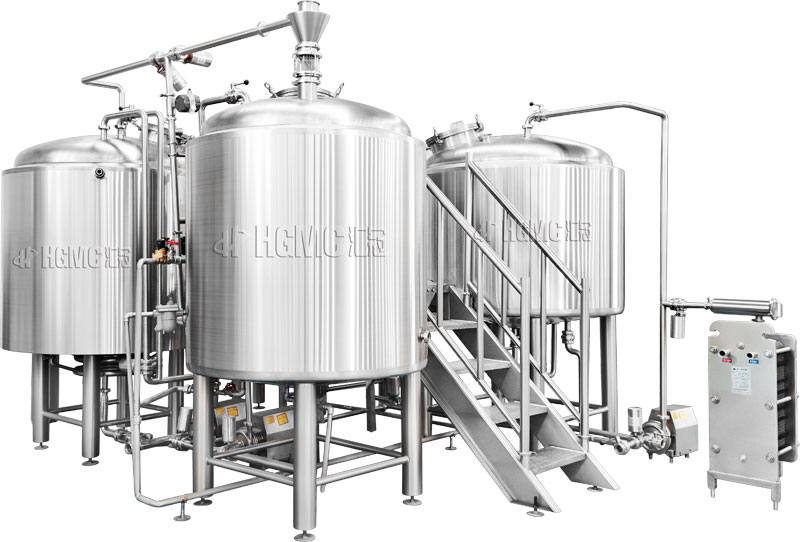
Reliability in daily brewing is defined by metallurgical standards and mechanical precision that prevent batch contamination and equipment fatigue. Industrial-grade micro brewery equipment utilizes 304/316L stainless steel and 0.5μm Ra finishes to ensure sanitation, while VFD-controlled pumps and high-torque gearboxes manage physical loads without failure. Systems achieving an 8,000-hour MTBF allow for consistent ±0.5°C temperature control, maintaining a 90% extract efficiency across hundreds of consecutive brew cycles.
The structural foundation of a dependable brewhouse relies on the thickness and grade of the alloy used in vessel construction. Using 3mm to 4mm cold-rolled stainless steel prevents the tank walls from warping under the thermal expansion and contraction cycles that occur during the 100°C boil and subsequent cooling. A 2024 study on vessel longevity found that tanks with a wall thickness below 2.5mm showed signs of stress fractures in 15% of units after only three years of heavy use.
These structural integrity issues are often compounded by the chemical stress of Clean-in-Place (CIP) cycles using caustic and acidic agents. Surfaces with a mirror-polished finish lower than 0.5μm Ra prevent organic material from adhering to the steel, which reduces the mechanical scrubbing required by the operator. By minimizing friction at the molecular level, these finishes allow for 99.9% bacterial removal during standard rinse cycles, protecting the flavor profile of sensitive styles like light lagers.
"A surface finish exceeding 0.8μm Ra creates microscopic 'harbors' for wild yeast and bacteria, increasing the chemical contact time required for sterilization by 35%."
| Technical Component | Reliability Standard | Operational Benefit |
| Material Shell | 304/316L Stainless Steel | Corrosion resistance against pH 2.0-12.0 |
| Internal Finish | < 0.5μm Ra (Electropolished) | Prevents biofilm formation and buildup |
| Welding Method | Automatic Orbital Welding | Eliminates manual slag and crevice defects |
| Insulation | High-Density Polyurethane | Maintains temp stability within 0.5°C |
Consistent sanitation leads to the performance of the mechanical drive systems, specifically the gearboxes that power the mash rakes and grain mills. High-reliability gearboxes are rated for a 100% duty cycle, meaning they can run for 24 hours straight without overheating the internal lubrication. Systems equipped with overload protection sensors can detect a 5% increase in torque, automatically stopping the motor to prevent gear stripping if a grain jam occurs in the grist hydrator.
Moving the processed mash into the kettle requires centrifugal pumps that maintain a steady laminar flow to avoid aerating the wort. Pumps equipped with Variable Frequency Drives (VFDs) allow the brewer to ramp up speeds gradually, reducing the mechanical shock that accounts for 40% of pump seal failures in traditional fixed-speed setups. This modulation ensures the pump operates at its Best Efficiency Point (BEP), saving approximately 18% in annual electrical costs for the production floor.
"The implementation of silicon carbide seals in centrifugal pumps allows for dry-run protection for up to 30 seconds, preventing immediate failure if a valve is accidentally closed."
This mechanical precision allows for the integration of advanced heat exchangers, which must handle the rapid transition of liquids from boiling to fermentation temperatures. A two-stage plate heat exchanger utilizes cold water and glycol to drop wort temperature from 95°C to 18°C in a single pass, typically in under 40 minutes. Data from 2025 energy audits show that exchangers with a high plate-count density recover up to 25% more thermal energy, which is repurposed to pre-heat the next batch of strike water.
Thermal management extends into the cellar, where the reliability of the glycol cooling jackets determines the attenuation of the yeast. Standard fermentation produces an exothermic reaction that can raise the internal temperature of a 30-barrel tank by 5°C to 8°C if not actively cooled. Reliable systems feature multi-zone jackets that cover the cone and the sidewall separately, allowing for precise control even when the tank is only 25% full.
| Measurement Type | Tolerance Level | Impact on Reliability |
| Temp Variance | ±0.1°C to ±0.5°C | Ensures consistent yeast metabolism |
| Pressure Rating | 30 PSI (2 Bar) Working | Supports natural carbonation (Spunding) |
| Flow Accuracy | 0.5% Pulse Meter | Precise water-to-grain ratios |
| Oxygen Pickup | < 20 ppb (Parts Per Billion) | Extends shelf life by 4-6 months |
The electronic control of these cooling zones is managed by Programmable Logic Controllers (PLCs) housed in water-resistant cabinets. In high-volume environments, these controllers must manage up to 50 individual data points simultaneously, from steam pressure to pump frequency. Using IP67-rated sensors ensures that the high humidity of the brewhouse—often reaching 90% during the boil—does not cause signal drift or short circuits in the hardware.
"Automation systems that utilize remote monitoring allow head brewers to receive real-time alerts if a fermentation temperature deviates by more than 0.5°C from the setpoint."
Reliable automation reduces the human labor involved in the brewing process, which typically accounts for 30% of total operational costs. By automating the strike water mixing and the kettle boil timers, a single operator can manage a triple-turn brew day without physical exhaustion. This reduction in manual intervention leads to a 15% decrease in workplace accidents related to heavy lifting or hot liquid handling, according to 2023 safety reports.
The ability to repeat these high-stress cycles daily depends on the quality of the valves and gaskets used throughout the fluid manifold. EPDM and PTFE gaskets are favored for their ability to withstand temperatures up to 140°C during steam sterilization cycles without losing their elasticity. Replacing standard rubber seals with high-performance polymers has been shown to reduce unplanned downtime caused by leaks by nearly 22% in professional settings.
| Maintenance Item | Service Interval | Reliability Factor |
| Pump Seals | 12-18 Months | Prevents wort loss and oxidation |
| PRV Valves | 6-Month Inspection | Protects tanks from vacuum collapse |
| Glycol Level | Monthly Check | Ensures consistent heat transfer |
| Gasket Sets | Annual Replacement | Maintains 100% sanitary seal |
Long-term reliability is finalized by the support and availability of spare parts for the critical components. Facilities that maintain a 95% uptime typically stock a "critical spares kit" containing solenoid valves, temperature probes, and pump impellers. This proactive approach to maintenance, combined with hardware built to industrial ISO standards, ensures that the brewing process remains a predictable science rather than a series of mechanical emergencies.
Ready to taste the story?
Browse our chef-developed, brown-butter cookie collection — baked in Brooklyn and shipped bakery-fresh nationwide.
Shop Cookies