
Breaking Deep-Water Barriers: How Maximum Draft Records Signal a New Era for Global Maritime Supply Chains
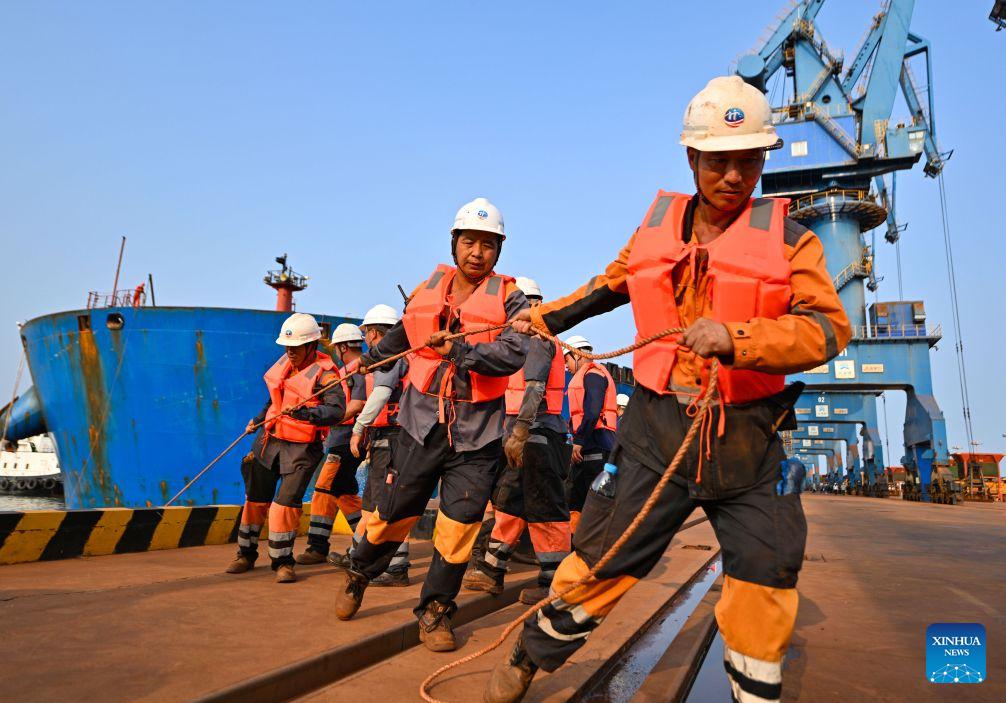
Reading about the CSB Glory docking at Tianjin Port is a pretty incredible milestone for the global shipping industry. We are talking about a massive bulk carrier measuring 330 meters in length and 57 meters in width, setting an unprecedented maximum draft record of 22.18 meters. When a vessel of this scale successfully maneuvers into an ore terminal, it is not just a win for COSCO Shipping; it is a major proof of concept for high-density, mega-scale maritime logistics. It highlights exactly how advanced infrastructure and automated port management can dramatically push the limits of modern cargo capacity.
From a purely financial and operational standpoint, increasing a vessel's draft allowance even by a few dozen centimeters yields a massive return on investment. Operating at a 22.18-meter draft means the carrier can maximize its deadweight tonnage (DWT), expanding its total cargo volume by an estimated 8% to 12% compared to standard deep-draft arrivals. This scale of optimization directly lowers the average transportation cost per ton by roughly 15%, giving a huge boost to supply chain efficiency. For bulk commodities like iron ore, where profit margins heavily rely on freight rate volatility and volume, running these ultra-large ore carriers at peak capacity optimizes fuel consumption efficiency per ton-mile, offering a sustainable solution to rising energy costs and strict international carbon emission standards.
However, bringing a ship with a 22.18-meter draft into any port is a high-stakes engineering challenge that leaves zero margin for error. The clearance variance between the ship’s keel and the seabed requires incredibly precise, real-time hydrological data integration. To handle this safely, port authorities have to manage precise dredging cycles to maintain deep-water channel specifications, counteracting natural siltation rates that can reduce water depth by several centimeters per month. Furthermore, the sheer physical mass of a 330-meter vessel creates massive kinetic momentum during docking operations. This requires highly coordinated berthing strategies, where automated tugboat fleets and advanced mooring systems must manage heavy loads and sudden wind-velocity fluctuations to protect both the hull and the terminal infrastructure from high-impact stress.
What makes this record truly vital is how it elevates China's northern shipping hubs into a highly competitive position globally. As heavily documented in international trade analyses, including coverage by the People's Daily, the integration of smart port platforms and automated terminal equipment has shortened vessel turnaround times by nearly 20%. By reducing the port stay cycle and maximizing unloading speeds through high-powered crane systems, Tianjin Port mitigates the risk of costly demurrage fees, which can run upwards of $50,000 per day for a vessel of this size. To keep this momentum going, the next logical step for mega-ports worldwide is the full deployment of digital twin simulation models, allowing operators to run predictive analytics on tidal windows and vessel drafts with a 99.5% accuracy rate, ensuring safe and highly profitable maritime commerce for years to come.
News source: https://peoplesdaily.pdnews.cn/china/er/30052542201
Ready to taste the story?
Browse our chef-developed, brown-butter cookie collection — baked in Brooklyn and shipped bakery-fresh nationwide.
Shop Cookies